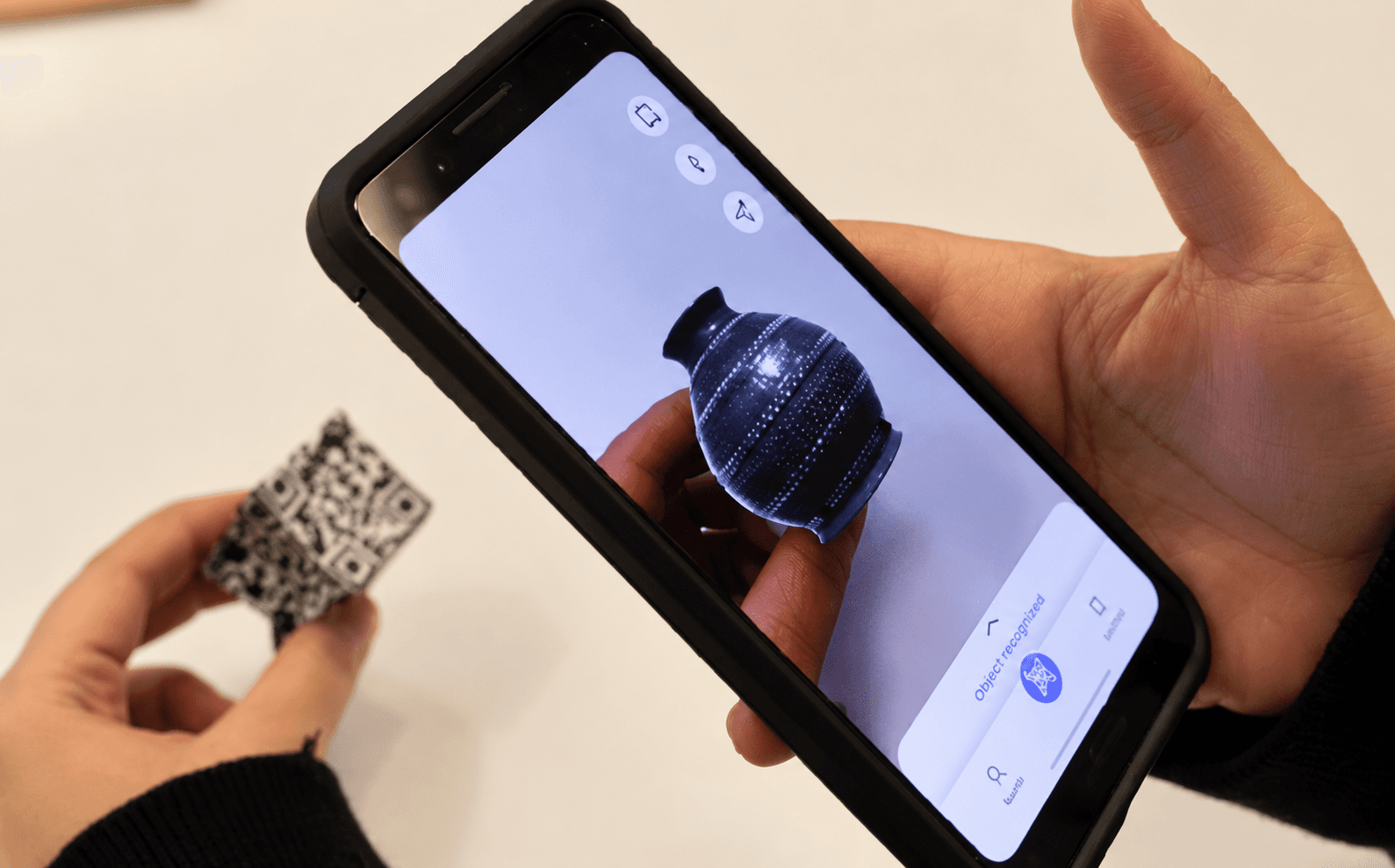
Traditional Rwandan board games like Igisoro have served as cultural bridges, passing down knowledge from elders to youth. However, to ensure that Igisoro remains relevant for modern generations, there's a need to revitalize the game through innovative technology, providing both an engaging educational experience and a deeper connection to Rwandan heritage.
The goal of this project is twofold:
To develop an interactive educational platform that helps children connect with Rwandan cultural heritage through an enhanced version of Igisoro.
To provide interdisciplinary students with hands-on experience in technology fields such as laser cutting, 3D printing, and coding, fostering both personal and professional growth while collaboratively modernizing Igisoro.
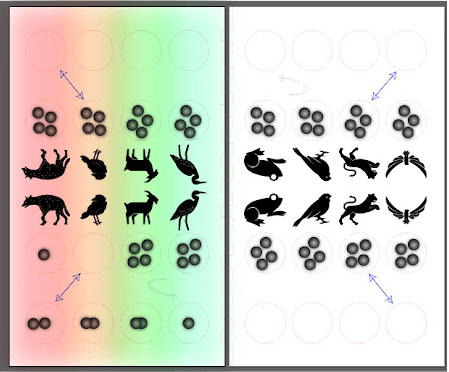
We modernized Igisoro by integrating digital media, focusing on enhancing the tactile experience of the game with technology. Through interactive projections, soundscapes, and storytelling, the revamped Igisoro game fosters cultural education while providing a fun, immersive gameplay experience. The gameboard features Rwandan clan totems, and digital elements like projections and animations represent clans and territories, enhancing both learning and engagement.
We began by delving into the material aspects of Igisoro, focusing on its tangible components and gameplay mechanics. This involved studying the physical game board, seeds (game pieces), and pits (holds the seeds) to understand their tactile qualities and significance in gameplay.
Through observation and analysis, we identified key elements that could be enhanced to better convey cultural heritage.
We conducted two prototyping iterations to explore different approaches to enhancing Igisoro with digital media. In the first prototype, we focused on tactile experience and linear narrative immersion.
This involved designing a paper board and experimenting with various types of seeds and visual cues to integrate storytelling elements into gameplay.

We organized a design workshop involving students and peers to gather feedback on the first prototype. This workshop provided valuable insights into the effectiveness of the tactile interface, narrative integration, and overall gameplay experience. Through open-ended discussions and observation of gameplay, we identified areas for improvement and refinement.
Based on the feedback from the design workshop, we made adjustments and redesigns to refine the prototype. This involved revisiting the narrative elements, gameplay mechanics, and tactile components to better align with cultural heritage themes. We also explored alternative approaches to storytelling and gameplay interactions to enhance engagement and immersion.
For the second prototype, we focused on integrating gameplay interactions with an open-ended narrative about Rwandan clans. This involved designing a wooden board with engraved clan totems and incorporating animated projections to represent each clan's territory. We also refined the tactile elements, such as the seeds and pits, to improve usability and immersion.

We discovered eight Rwandan clans, the Abanyiginya, Abega, Abazigaba, Abagesera, Abasinga, Abacyaba, Ababanda, and the Abashambo clan.
Each clan was represented by a totem: the crane, frog, leopard, wagtail, eagle, hyena, and crow. We integrated these totems in the design of the gameboard, where each clan was positioned above a row of pits representing the land each clan hails from.

Our team’s final seed choice were the flat glass marbles. We observed that they were easy for a user to manipulate and the pebbles prevented stacking.

Following feedback from prototype 1, pits were recessed into the board's surface for a flush fit. Clear dessert bowls with a lip were chosen, allowing light projection through the bowls to create unique shadows and augment the visual experience. Higher density 3D printed stilts would improve board stability in future versions.
The final prototype of the game board was crafted from thin Baltic Birch wood, emitting a natural scent that enhances the tactile experience, connecting players to Rwanda's traditional gameplay. To strengthen cultural ties, future iterations could use local Rwandan wood. Visual cues, such as directional arrows, were added to aid new users in understanding the board's layout. Exploration of inner and outer cues for differentiating board sections is suggested, as previous cues proved too narrow in interpretation.


We chose to use projection to create an intuitive and engaging way of playing Igisoro where the player progressively learns how to play the game through the intensity of the projections and soundscapes.
TouchDesigner was employed to project unique animations onto the game board, representing the territories populated by the clans. Projections responded to gameplay, with brightness increasing as pits fill, indicating the winning player's status. Soundscapes of each totem's animal noises accompany the projections, enhancing player engagement and learning.
The first prototype successfully demonstrated basic interaction, usability, and navigation. It featured the homepage, activity pages, and event pages, but certain elements such as seasonal pages, reviews, and map integrations were not yet included. Future iterations are planned to integrate these additional features, ensuring the game continues to evolve as an interactive educational platform for future generations.
Final Invitations